
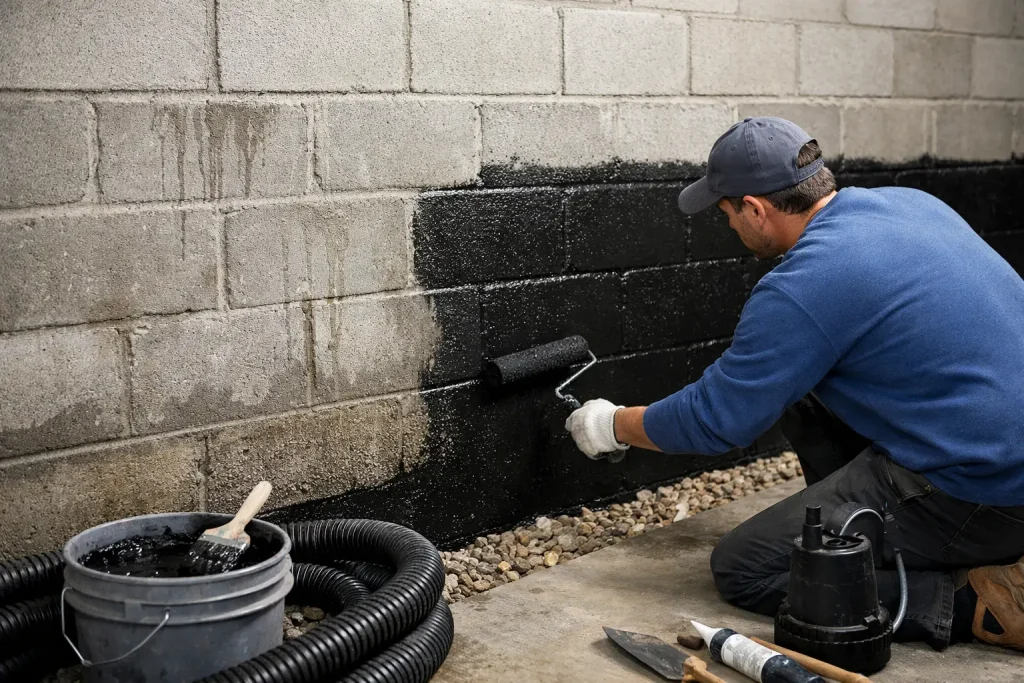
A wet cinder block basement rarely starts with a dramatic flood. More often, it begins with a damp line along the wall, white powder on the blocks, a musty smell after rain, or a small puddle near one corner. Knowing how to waterproof a cinder block basement starts with recognizing that water is usually following a path from outside the home. Covering the visible symptoms without correcting that path can leave you with the same problem at the next heavy rain.
Cinder block walls are especially vulnerable because they are not solid concrete. Their hollow cores, mortar joints, and porous surfaces can allow moisture to move through the wall over time. The right repair depends on where the water is coming from, how often it happens, and whether there are signs of foundation movement. No problems, just solutions means looking at the full picture before recommending a fix.
Find Out Why the Cinder Block Basement Is Wet
Before applying a waterproof coating or installing a drainage system, identify the source of the moisture. Water stains, efflorescence, peeling paint, and mold are clues, but they do not always tell the whole story.
Look closely at when the problem occurs. If water appears only during or shortly after heavy rain, surface drainage around the foundation is often a major contributor. Overflowing gutters, downspouts that discharge beside the house, negative grading, and clogged exterior drains can saturate the soil next to the basement wall. That water builds pressure against the foundation and looks for openings through mortar joints, cracks, or the cinder blocks themselves.
If the basement stays damp even in dry weather, groundwater or high humidity may be involved. In New Jersey, changing water tables and clay-heavy soils can keep pressure against foundation walls long after a storm has passed. Water collecting at the floor-to-wall joint is another common sign that hydrostatic pressure is pushing groundwater beneath the slab and into the basement.
Do not overlook plumbing. A slow pipe leak, a failed appliance connection, or a leaking exterior hose bib can resemble a waterproofing problem. A professional inspection should separate water intrusion from plumbing issues so your investment addresses the actual cause.
Start With Exterior Water Management
The most effective way to protect a cinder block basement is to keep excess water away from the foundation in the first place. Exterior improvements are often the right first step when the issue is minor, seasonal, and clearly tied to roof runoff or poor grading.
Clean gutters regularly and make sure downspouts carry water well away from the home. A downspout that empties at the foundation can deliver hundreds of gallons of water to the same small area during a storm. Extensions should discharge where water continues away from the house, not toward a neighbor’s property or back toward the foundation.
The soil around the home should slope away from the walls. Settled mulch beds, patios, and landscaping can create low spots that direct rainwater toward the basement. Regrading can help, but it must be done carefully. Soil should not be piled high against siding, wood trim, or brick veneer.
Exterior waterproofing may also involve excavating down to the foundation wall, repairing cracks and damaged mortar, applying a waterproof membrane, and installing or replacing footing drains. This approach addresses water before it reaches the blocks. It can be a lasting solution, but excavation is more disruptive and may not be necessary for every home. Access limitations, landscaping, decks, driveways, and the condition of existing drains all affect whether exterior work is the best choice.
Repair Cracks and Mortar Joints Correctly
Small cracks in cinder block walls do not automatically mean the foundation is failing, but they should be evaluated. Hairline cracks may result from shrinkage or age. Wider, stair-step, horizontal, or actively growing cracks can point to settlement, soil pressure, or structural movement.
Loose mortar and deteriorated joints should be repaired before any coating is applied. Waterproof paint cannot stabilize a wall, and it will not bridge a significant crack that is still moving. If a wall is bowing, leaning, or showing horizontal cracking, foundation repair may be needed alongside waterproofing. Treating structural damage as a simple moisture issue can delay the repair and make it more costly later.
When Interior Waterproofing Is the Better Answer
For many finished or partially finished basements, an interior drainage system is the most practical way to manage groundwater. Rather than attempting to stop every drop of water outside, this system relieves water pressure at the basement perimeter and directs it safely to a sump pump.
An interior French drain is installed along the inside edge of the basement floor. Water entering through the wall, floor joint, or beneath the slab is collected in a drainage channel and carried to a sump basin. The sump pump then moves the water out and away from the home through a properly routed discharge line.
This method is not a shortcut. When installed correctly, it provides a controlled path for water that would otherwise enter the basement. It is particularly effective when water appears at the floor-to-wall seam, when exterior excavation is impractical, or when groundwater is the primary issue.
A dependable system should include a properly sized sump pump, a check valve, a sealed basin where appropriate, and a discharge line that will not dump water back beside the foundation. In areas prone to power outages, a battery backup pump can provide valuable protection during the storms that create the greatest demand on the system.
Use Coatings for the Right Job
Waterproof coatings and masonry sealers have a place, but homeowners should understand their limits. A quality interior masonry coating can reduce dampness and improve the appearance of a cinder block wall after the surface has been properly cleaned and repaired. It may be useful for minor moisture vapor or as part of a broader waterproofing plan.
It is not a reliable standalone solution for active water pressure. If groundwater is pressing against the wall, paint-like coatings can blister, peel, or fail at the joints. Applying a coating over efflorescence or damp blocks also prevents proper adhesion. The water is still there, and it may simply find another route.
Avoid covering a wet cinder block wall with framing, insulation, or finished wall panels before the moisture issue is corrected. Materials hidden behind a finished wall can trap moisture and allow mold growth to develop out of sight. A dry, healthy basement begins with controlling water, not concealing it.
Know When to Bring in a Waterproofing Specialist
A few maintenance corrections may solve a small runoff issue. But recurring water, visible mold, damaged walls, a failing sump pump, or cracks that suggest movement deserve a professional evaluation. The goal should be a clear explanation of what is happening, what options are available, and which work is truly necessary.
At A-1 Basement Solutions, trained in-house crews focus on inspection-driven recommendations rather than pressure-based sales tactics. That matters because one basement may need grading and drainage improvements, while another needs an interior French drain, sump pump protection, or foundation repair. The right system is the one that fits the home and addresses the source of the water.
Ask any contractor how the proposed system handles water, where the discharge will go, what work is included, and what warranty applies. You should also understand who will perform the work. Clear answers, clean installation practices, and long-term warranty protection give homeowners a better basis for making a decision.
Keep the Basement Dry After Repairs
Waterproofing is not a one-time excuse to forget about the basement. Test your sump pump periodically by pouring water into the pit and confirming that it activates and discharges properly. Keep gutters clean, inspect downspout extensions after storms, and watch for new cracks, stains, or odors.
If you use a dehumidifier, treat it as humidity control rather than proof that water intrusion is solved. It can make the space more comfortable and help protect stored belongings, but it cannot relieve groundwater pressure or repair a drainage failure.
A dry basement protects more than stored boxes and finished living space. It helps protect indoor air quality, foundation materials, and the long-term value of your home. When moisture returns, act while the evidence is still visible and the repair options are still straightforward.