
A damp basement rarely starts as a basement problem. More often, it starts outside – with soil that holds water, grading that pitches the wrong way, clogged footing drains, or hydrostatic pressure building against the foundation. That is why foundation waterproofing systems matter so much. The right system does more than stop a puddle on the floor. It protects the structure, reduces mold risk, and helps preserve the value of the home.
For New Jersey homeowners, that matters even more. We see a wide mix of older foundations, high water tables in some areas, heavy seasonal rain, and freeze-thaw cycles that can open the door to water intrusion over time. A quick patch may hide symptoms for a while, but a properly designed waterproofing system addresses the source of the problem.
What foundation waterproofing systems actually do
At the most basic level, foundation waterproofing systems are designed to control how water behaves around and under your home. Some systems keep water from reaching the foundation wall in the first place. Others relieve pressure and collect water after it reaches the foundation, then move it safely away from the house.
That distinction matters. Homeowners are often told they need “waterproofing” when what they are really being offered is a crack filler, a coat of paint-like sealant, or a short-term drainage fix. Those measures can have a place in the right situation, but they are not all the same thing, and they should not be presented as if they are.
A good contractor starts by figuring out how the water is getting in. Is it surface runoff? Groundwater pressure? Wall cracks? Joint seepage where the floor meets the wall? A failed sump pump? The answer shapes the system.
Interior vs. exterior foundation waterproofing systems
Most homeowners end up comparing interior and exterior approaches, and neither is automatically right for every house.
Interior systems
Interior foundation waterproofing systems usually involve a perimeter drainage channel installed along the inside edge of the basement floor. Water entering at the wall-floor joint or beneath the slab is directed into that channel, then sent to a sump pump and discharged away from the home.
This approach is often the most practical solution for an existing home with active seepage. It is less disruptive than excavating around the entire house, and in many cases, it handles hydrostatic pressure very effectively. It does not stop water from touching the outside of the foundation wall, but it does control the water before it reaches your living space.
For many basements, especially finished or partially finished ones, this is the system that offers the best balance of performance, cost, and long-term serviceability.
Exterior systems
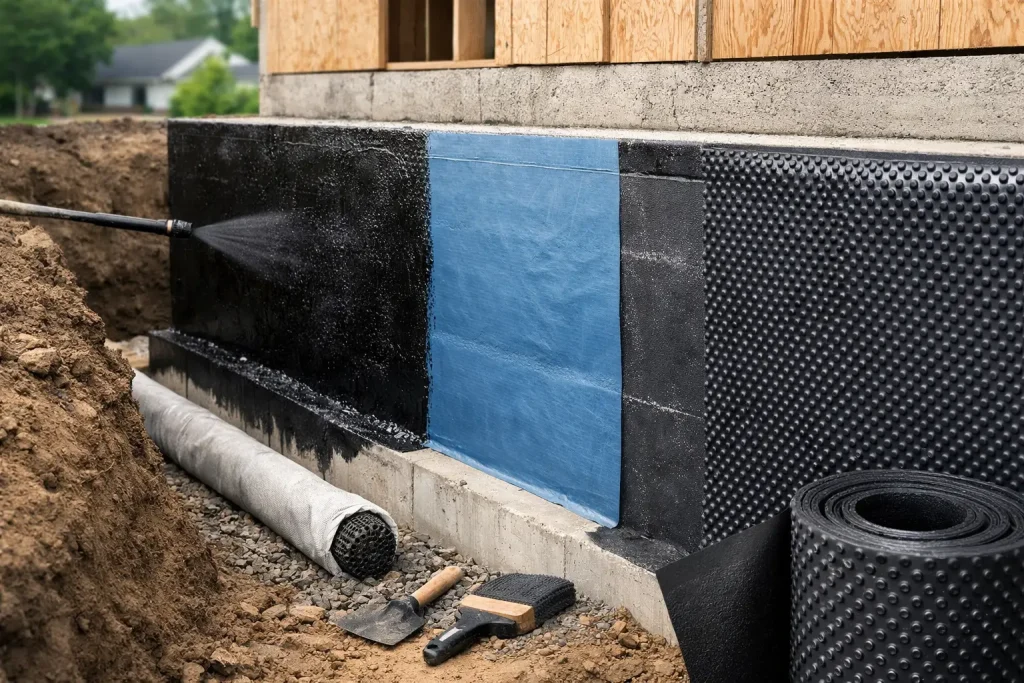
Exterior foundation waterproofing systems work from the outside. These may include excavation down to the footing, foundation wall repair, waterproof membranes, drainage boards, and exterior footing drains surrounded by stone. The goal is to block and redirect water before it gets through the wall.
When done correctly, exterior waterproofing can be a very strong solution, especially when foundation walls are deteriorating or when exterior access is already part of a larger repair project. But it is also more invasive, more expensive, and more dependent on site conditions. Landscaping, patios, walkways, porches, and tight property lines can all complicate the work.
That is why honest recommendations matter. Some homes truly need exterior work. Others can be protected very effectively with a well-designed interior drainage system and corrective work outside, such as grading or downspout extensions.
The parts of a complete system
The word system is important here because waterproofing works best when the components support each other.
A perimeter drain on its own is only as dependable as the sump pump it feeds. A sump pump is only as useful as the discharge line carrying water away from the house. Exterior drainage improvements help, but they may not be enough if groundwater is rising under the slab. Crack repair can stop isolated leaks, but it will not solve broad seepage caused by pressure under the foundation.
A complete solution may include interior drainage, a sump pump with battery backup, discharge line protection, wall crack repair, exterior grading corrections, gutter and downspout improvements, and in some cases crawl space encapsulation or structural repair. Not every house needs all of that. The point is that basement water problems are usually connected, and piecemeal fixes often leave the real weakness untouched.
Signs your home may need foundation waterproofing systems
Some signs are obvious, like standing water on the basement floor or water running down a wall after heavy rain. Others are easier to dismiss until the damage gets worse.
A musty odor, white mineral residue on concrete walls, peeling paint, damp carpet edges, rusty metal, warped trim, and recurring mold growth can all point to moisture intrusion. So can hairline wall cracks that slowly widen or floor cracks that stay damp.
If your basement only leaks once or twice a year, it still deserves attention. Intermittent water problems are often harder to diagnose, but they can still damage drywall, insulation, flooring, stored belongings, and air quality over time.
Why one-size-fits-all recommendations fall short
Homeowners are right to be skeptical of companies that push the same fix on every house. Water does not enter every basement the same way, and the best repair depends on construction type, foundation condition, drainage patterns, and how the space is used.
A block foundation may need a different strategy than poured concrete. A finished basement calls for a different discussion than an unfinished utility space. A home with chronic groundwater issues may need a stronger pump setup than a home mainly dealing with roof runoff.
That is also why low-price promises can be misleading. If a proposal only treats the symptom you can see today, it may leave you paying again later for the cause that was never solved.
How to evaluate foundation waterproofing systems for your home
The best place to start is with a thorough inspection, not a sales pitch. A contractor should be able to explain where the water is coming from, what conditions are contributing to it, and why the recommended system fits your house.
Ask practical questions. Will the system manage water below the slab, water entering through the wall, or both? How is the sump pump sized? Where will the discharge go? What happens during a power outage? If excavation is recommended, why is it necessary? If an interior system is recommended, what exterior corrections should still be made?
You should also pay attention to who is doing the work. Waterproofing is not just about materials. Installation quality matters. Clean execution matters. Accountability matters. A system is only as reliable as the crew that installs it and the company standing behind it.
That is one reason many homeowners prefer companies with trained in-house crews rather than rotating subcontractors. Consistency on the job site usually leads to better workmanship, clearer communication, and fewer loose ends.
Cost, value, and the long view
Foundation waterproofing systems are not the place to shop by price alone. Cost matters, of course, but so does what you are actually getting.
A cheaper quote may leave out battery backup protection, proper drainage depth, wall treatment details, or discharge improvements. It may also come with weak warranty terms that offer very little real protection if the problem returns.
A stronger system often costs more because it is more complete. That does not mean every homeowner needs the most extensive option. It means the real comparison should be based on scope, reliability, warranty coverage, and whether the solution fits the home.
For many families, financing also plays a practical role. If a better solution prevents repeat repairs, mold cleanup, and damage to finished space, it can be the more economical decision over time.
Choosing a contractor you can trust
This kind of work is personal. You are letting someone evaluate a vulnerable part of your home, explain a problem that may be stressful, and recommend a repair that affects the health and value of the property.
That is why trust matters as much as technical knowledge. Look for a company that explains the issue clearly, answers questions directly, and does not try to create urgency where none exists. If someone relies on fear to close the sale, that is usually a sign to keep looking.
At A-1 Basement Solutions, that solutions-first approach matters because homeowners deserve clear answers, solid workmanship, and a system built for long-term performance – not pressure tactics.
The right waterproofing plan should leave you feeling informed, not cornered. It should make sense for your home, your budget, and the way the basement is used.
Water around a foundation rarely gets better by waiting. But it also should not force you into a rushed decision. A careful inspection, an honest recommendation, and a well-built system can turn a damp, uncertain basement into one less thing you have to worry about.